Read the Correct Torque Specification
- Identify every assembly detail required by a wheel torque chart.
- Select the complete matching row rather than relying on wheel diameter.
- Apply the matching torque and maker-specific recheck schedule.
- Torque wrench — Apply the selected torque using a wrench with an appropriate operating range.
- Wheel-nut sockets — Engage the nut securely without damaging its wrenching surfaces.
- Caliper — Help identify stud diameter when matching the assembly to the chart.
- Inspection light — Illuminate nut seats, flange construction, and wheel markings.
- Wire brush — Remove loose debris from identification markings so they can be read.
A wheel torque chart can distinguish stud size, lug-nut design, wheel size or arrangement, and wheel material. Read the complete matching row. A value from a similar-looking assembly is not automatically suitable.
Material can change the specified torque. In the supplied Diamond C chart, a steel wheel measuring 15 inches with a 1/2-inch stud and coned nut uses 90-120 ft-lb, while the listed aluminum wheel of the same diameter, stud size, and nut style uses 90-100 ft-lb. These are maker-specific examples; values vary by maker.
Flange construction also matters. Diamond C lists 275-325 ft-lb for 5/8-inch studs with non-rotating flanged nuts on the listed steel 17.5-inch single or 16-inch dual wheels. Its listed aluminum 16-inch wheel with a 5/8-inch stud and rotating-flange nut uses 150 ft-lb. Values vary by maker and assembly.
Torque selection and torque verification belong together. Diamond C calls for checking before the first tow and again after about 50 miles. That schedule applies to this source and should not replace another maker's instructions; values and intervals vary by maker.
How It Works
Match the assembly, not its appearance
Read the chart against the stud size, nut design, wheel diameter, specified single or dual arrangement, and wheel material. A similar-looking wheel can require a different torque because its fasteners and seating surfaces develop clamp load differently.
Material and flange construction matter
In the supplied Diamond C chart, the 15-inch steel wheel with a 1/2-inch stud and coned nut uses 90-120 ft-lb, while the matching listed aluminum example uses 90-100 ft-lb. Rotating and non-rotating flanges have different contact behavior during tightening, so a shared stud size does not justify transferring a torque value.
Selection includes verification
Tightening torque is an indirect means of producing clamp load, and friction influences the relationship between wrench torque and fastener tension. Seating and settling can affect clamp retention, which makes the applicable recheck schedule part of the job. Diamond C calls for checking before the first tow and again after about 50 miles; another maker's instructions may differ.
Step-by-Step Procedure
0/7 doneDiamond C chart examples; values vary by maker
| 15-inch steel wheel, 1/2-inch stud, coned nut | 90-120 ft-lb |
| 15-inch aluminum wheel, 1/2-inch stud, coned nut | 90-100 ft-lb |
| 16-inch aluminum wheel, 5/8-inch stud, rotating-flange nut | 150 ft-lb |
| Torque checks | Before first tow and again after about 50 miles |
Figures
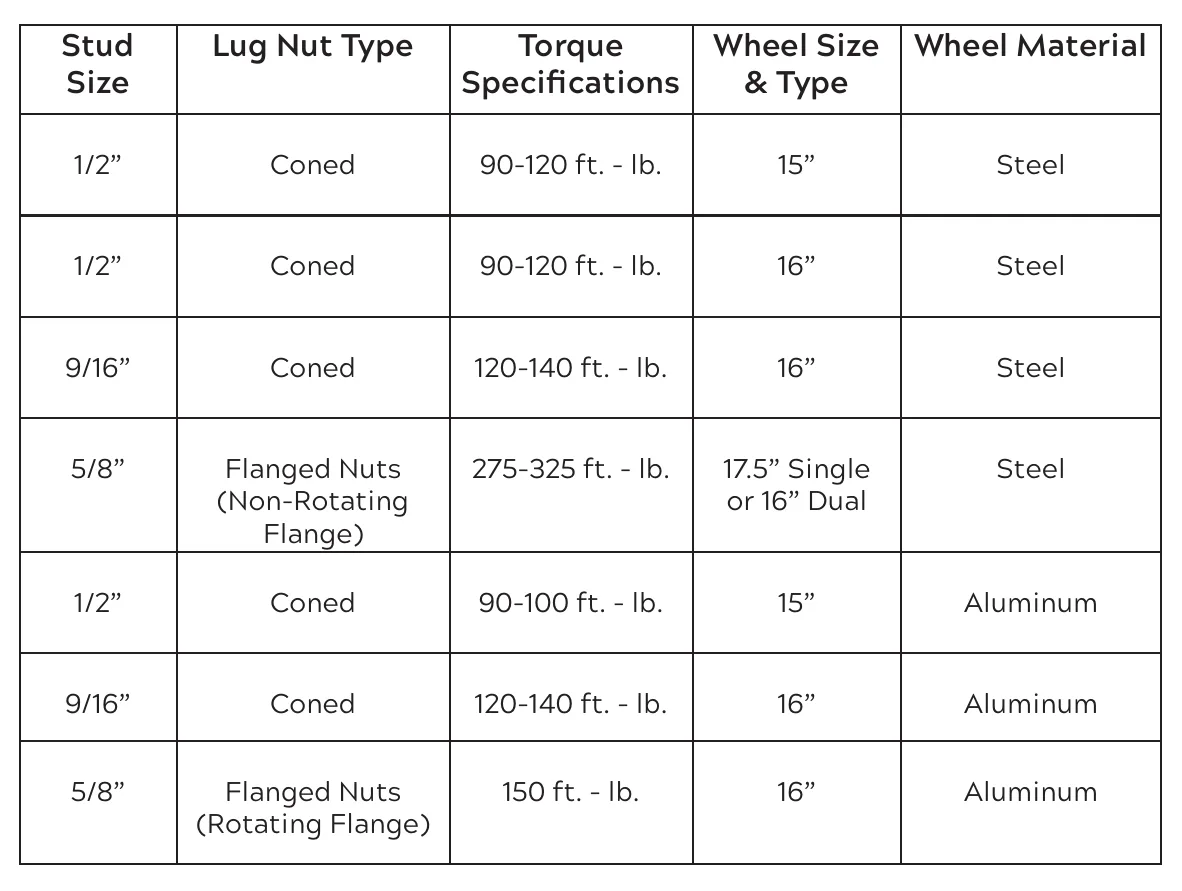
Diagnostic Chart
| Symptom | Check | Spec / Expected | Likely cause & fix |
|---|---|---|---|
| A torque value was selected using wheel diameter alone. | Confirm stud size, nut design, wheel material, and any arrangement requirement before accepting the selected row. | Diamond C: 15-inch steel wheel, 1/2-inch stud, coned nut: 90-120 ft-lb; listed aluminum counterpart: 90-100 ft-lb. | The chart's material distinction was overlooked. Basis: Lug-Nut-Torque-Specs 2023 |
| A flanged nut is being treated as interchangeable with another flanged design. | Distinguish rotating from non-rotating flange construction and match wheel material, diameter, and arrangement. | Diamond C lists 275-325 ft-lb for 5/8-inch studs with non-rotating flanged nuts on the listed steel 17.5-inch single or 16-inch dual wheels; the listed aluminum 16-inch wheel with a 5/8-inch stud and rotating-flange nut uses 150 ft-lb. | Stud size was matched, but flange construction or wheel details were not. Basis: Lug-Nut-Torque-Specs 2023 |
| The tightening job is considered complete without a recheck plan. | Confirm the applicable maker's instructions and record when verification is due. | Diamond C: Before first tow and again after about 50 miles. | Torque verification was omitted or assumed to be the same for every maker. Basis: Lug-Nut-Torque-Specs 2023 |
| Wheel markings or nut construction cannot be confidently identified. | Clean obscured markings, inspect with adequate lighting, and obtain reliable assembly identification before selecting torque. | Do not assign a torque while required assembly details remain unresolved. | Dirt, poor visibility, or uncertain component identity prevents a reliable chart match. Basis: General shop practice |
At the Bay: Diagnose the Case
CASE 1 / 4
A torque value was selected using wheel diameter alone.
- Test
- Compare
- Correct
Select the next check
Basis: Lug-Nut-Torque-Specs 2023. A likely cause is a hypothesis; confirm it with the applicable service procedure before repair.
Common Bay Mistakes
- ✕ Choosing torque from wheel diameter alone.
- ✕ Transferring a steel-wheel value to an aluminum wheel.
- ✕ Treating rotating and non-rotating flanges as equivalent.
- ✕ Applying Diamond C values or intervals to another maker without confirmation.
Quick Check
Practice only — not scored.
Plan the Service Sequence
Planning practice only. Follow the applicable manufacturer's instructions, employer safety program and qualified supervision on real equipment.
Plan the first action. Compare the service steps with the bay mistakes.
Source: Lug-Nut-Torque-Specs 2023 — 1