Separate Alignment Wear from Other Tire Problems
- Distinguish alignment wear from inflation, balance, and braking problems.
- Select checks that match the observed tread pattern.
- Apply pressure safeguards and recognize when alignment-shop referral is required.
- Tire pressure gauge — Measure cold inflation pressure and compare it with the tire manufacturer's recommendation for the actual load.
- Tread depth gauge — Compare tread wear across the tire and around its circumference to document the pattern.
- Inspection light — Illuminate tread surfaces so localized wear, cupping, and flat spots are easier to identify.
- Chalk — Mark suspicious tread areas for closer inspection and follow-up comparison.
- Wheel chocks — Secure the trailer against movement during stationary inspection.
A tire wear complaint does not automatically identify an axle alignment fault. The diagnostic chart separates pressure-related wear, camber or loading concerns, toe wear, imbalance, and tire skidding. Match the observed pattern to the listed checks before choosing a repair.
Center tread wear is associated with excessive inflation, while edge wear is associated with insufficient inflation. Correct pressure according to the tire catalog for the actual load. Check pressure while the tires are cold before operation, and do not release air from hot tires.
Side wear is associated with loss of camber or overloading. Check that the load does not exceed the axle rating and use an alignment shop for alignment work. Toe wear is associated with incorrect toe-in and also calls for alignment-shop attention; the chart does not provide a field bending procedure.
Cupping directs attention to tire balance and bearing adjustment. Flat spots direct attention to wheel lockup and skidding, including brake adjustment. Inspect wear frequently because an established pattern can remain difficult to stop even after its original cause has been corrected.
How It Works
A wear pattern directs the investigation
Tread wear is evidence of how the tire contacts the road, not automatic proof of an axle alignment fault. Excessive inflation is associated with center wear, while insufficient inflation is associated with edge wear; compare cold pressure with the tire catalog recommendation for the actual load. Do not exceed rim or wheel pressure capacity, and do not release air from hot tires.
Separate loading concerns from alignment concerns
Side wear is associated with loss of camber or overloading, so verify axle loading before selecting a repair. Incorrect toe-in can scrub the tread sideways as the tire rolls, producing toe wear. Refer alignment work to an alignment shop; the lesson provides no field bending procedure.
Distinguish uneven rolling from skidding
Cupping directs attention to tire balance and bearing adjustment because disturbed wheel motion can produce uneven tread contact. Flat spots direct attention to wheel lockup and skidding, including brake adjustment, because a sliding tire concentrates abrasion on a localized tread area. Continue frequent tread inspections after correction because an established wear pattern can remain difficult to stop.
Step-by-Step Procedure
0/7 doneFigures
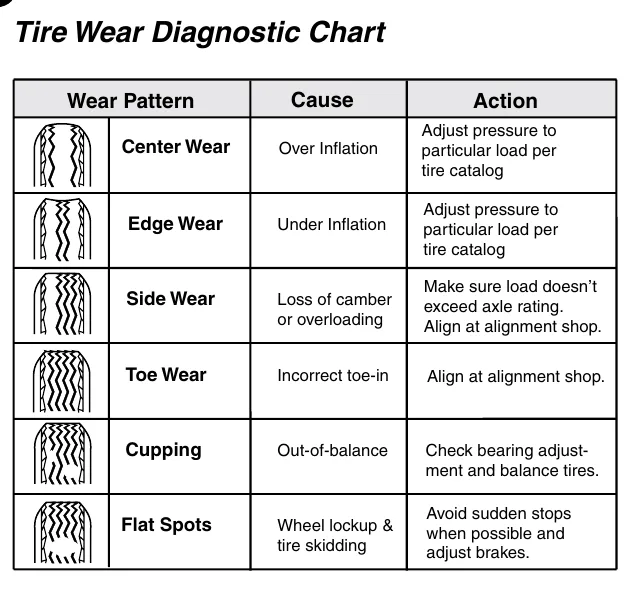
Diagnostic Chart
| Symptom | Check | Spec / Expected | Likely cause & fix |
|---|---|---|---|
| Center tread wear or edge wear | Identify where wear is concentrated, measure pressure cold before operation, and compare it with the tire manufacturer's recommendation for the actual load. | Use the tire catalog pressure for the actual load without exceeding rim or wheel pressure capacity. Do not bleed pressure from hot tires. | Center wear is associated with excessive inflation; edge wear is associated with insufficient inflation. Basis: 9-15k complete service manual |
| Side wear or toe wear | For side wear, verify that loading does not exceed the axle rating. Refer side-wear alignment concerns and toe wear to an alignment shop. | Do not exceed the axle rating. Alignment work requires alignment-shop attention; no field bending procedure is provided. | Side wear is associated with loss of camber or overloading; toe wear is associated with incorrect toe-in. Basis: 9-15k complete service manual |
| Cupping | Check tire balance and bearing adjustment before treating the complaint as an alignment fault. | The lesson directs balance and bearing-adjustment checks but supplies no adjustment tolerance or torque. | Tire imbalance or incorrect bearing adjustment may contribute to cupping. Basis: 9-15k complete service manual |
| Flat spots | Investigate wheel lockup and skidding, including brake adjustment. | The lesson calls for brake-adjustment investigation but supplies no brake adjustment setting. | Wheel lockup and skidding can abrade a localized area of tread. Basis: 9-15k complete service manual |
At the Bay: Diagnose the Case
CASE 1 / 4
Center tread wear or edge wear
- Test
- Compare
- Correct
Select the next check
Basis: 9-15k complete service manual. A likely cause is a hypothesis; confirm it with the applicable service procedure before repair.
Common Bay Mistakes
- ✕ Calling every tire wear complaint an axle alignment fault.
- ✕ Bleeding hot tires to reach a cold-pressure recommendation.
- ✕ Attempting field axle bending without an authorized procedure.
- ✕ Assuming established wear disappears immediately after correction.
Quick Check
Practice only — not scored.
Plan the Service Sequence
Planning practice only. Follow the applicable manufacturer's instructions, employer safety program and qualified supervision on real equipment.
Plan the first action. Compare the service steps with the bay mistakes.
Source: 9-15k complete service manual — 78-79