Check Loading and Tires Before Travel
- Verify loaded weight against every applicable rating.
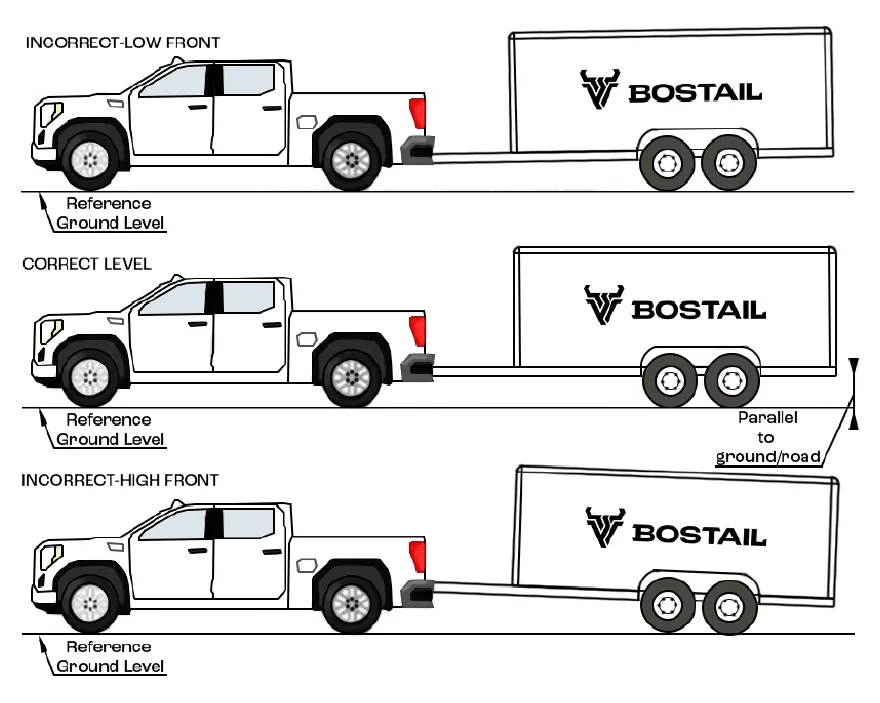
- Assess trailer level and measured load distribution.
- Inspect tires and verify inflation and lug-fastener torque before travel.
- Tire pressure gauge — Measure tire inflation for comparison with the tire manufacturer's specifications.
- Air hose with inflation chuck — Adjust tire inflation to the tire manufacturer's specifications.
- Spirit level — Check the supporting surface and loaded trailer frame for level.
- Flashlight — Illuminate tire tread, sidewalls, wheel areas, and the certification label during inspection.
- Torque wrench and correctly fitting sockets — Verify lug-fastener torque against the applicable specified torque.
Use the trailer's safety certification label or tag to identify its gross vehicle and axle weight ratings. Gross vehicle weight rating includes trailer load capacity and empty trailer weight. The load-carrying capacity must not exceed the rating of the weakest rated component.
Do not exceed a tire's load rating, the trailer's gross vehicle weight rating, or its gross axle weight rating. Excess weight toward either end of the trailer creates uneven axle loading. Overloading can contribute to excessive component wear and sway.
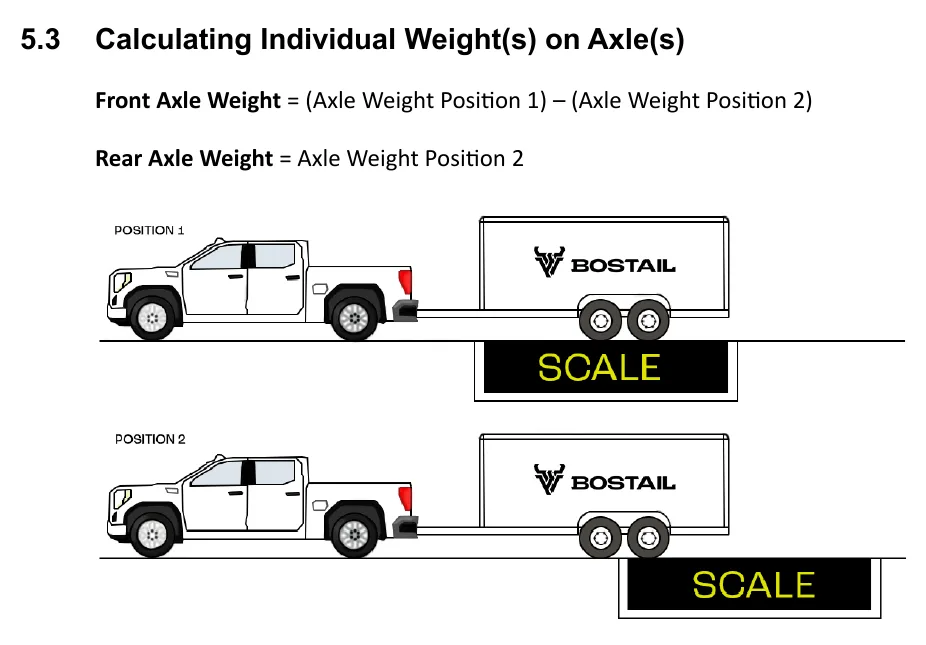
Check loaded trailer level on a surface that is level both front-to-back and side-to-side. The source identifies a certified truck scale as the most accurate method for measuring loaded weight distribution. Do not use visual level alone as a substitute for weight measurement.
Before travel, confirm that tires are inflated to their manufacturer's specifications. Inspect for damage and excessive wear, and replace damaged or worn tires. Check lug nuts or bolts for the specified torque and allow time to complete needed maintenance or repairs before departure.
How It Works
Ratings define the loading limits
The certification label or tag identifies gross vehicle and axle weight ratings; gross vehicle weight rating includes both empty trailer weight and load capacity. Load-carrying capacity is limited by the weakest rated component, so remaining capacity elsewhere cannot justify exceeding a tire, axle, or trailer rating. Excess loading increases component stress and can contribute to wear, sway, and loss of control.
Level appearance is not a weight measurement
Check the loaded trailer frame on a surface that is level front-to-back and side-to-side, then use a certified truck scale to measure loaded weight distribution. Cargo concentrated toward either end can create uneven axle loading even when the trailer appears acceptably level. The source identifies a certified truck scale as the most accurate method for measuring loaded weight distribution; visual level is not a substitute.
Tires and wheel retention complete the inspection
Before travel, verify tire inflation against the tire manufacturer's specifications, inspect for damage and excessive wear, and replace damaged or worn tires. Incorrect inflation can promote excessive tire flexing, heat buildup, and uneven wear, while inadequate wheel clamping can permit movement at the wheel mounting surfaces. Verify lug nuts or bolts against the specified torque and leave time to complete necessary service before departure.
Step-by-Step Procedure
0/8 doneFigures
Diagnostic Chart
| Symptom | Check | Spec / Expected | Likely cause & fix |
|---|---|---|---|
| The trailer looks level, but its loaded weight is unknown. | Read the certification label or tag, identify applicable component ratings, and obtain certified truck scale measurements of loaded weight distribution. | Do not exceed tire load ratings, gross vehicle weight rating, gross axle weight rating, or the weakest-component limit. | Visual appearance can conceal overloading or uneven axle loading. Basis: Bostail 8K Axle Manual |
| The loaded trailer sits unevenly or cargo is concentrated toward an end. | Confirm the surface is level front-to-back and side-to-side, check frame level, redistribute the load evenly, and verify the resulting weight distribution at a certified truck scale. | Check loaded trailer level on a level surface; use measured weight distribution rather than visual level alone. | Excess weight toward either end creates uneven axle loading; an uneven surface can also mislead the level check. Basis: Bostail 8K Axle Manual |
| A tire appears underinflated, damaged, or excessively worn. | Measure inflation with a tire pressure gauge and inspect the tread and sidewalls. Correct inflation and replace damaged or worn tires before travel. | Inflation must match the tire manufacturer's specifications; damaged or worn tires require replacement. | Incorrect inflation, physical damage, or wear can make the tire unsuitable for travel. Basis: Bostail 8K Axle Manual |
| Lug-fastener torque has not been verified before departure. | Identify the applicable specified torque and verify lug nuts or bolts with a torque wrench and correctly fitting socket. | Lug nuts or bolts must meet the specified torque; complete necessary maintenance or repairs before departure. | An omitted torque check leaves wheel-fastener condition unverified. Basis: Bostail 8K Axle Manual |
At the Bay: Diagnose the Case
CASE 1 / 4
The trailer looks level, but its loaded weight is unknown.
- Test
- Compare
- Correct
Select the next check
Basis: Bostail 8K Axle Manual. A likely cause is a hypothesis; confirm it with the applicable service procedure before repair.
Common Bay Mistakes
- ✕ Treating gross vehicle weight rating as cargo capacity alone.
- ✕ Assuming a level-looking trailer cannot be overloaded.
- ✕ Using spare capacity elsewhere to excuse an overloaded component.
- ✕ Guessing tire pressure or lug torque instead of checking specifications.
Quick Check
Practice only — not scored.
Plan the Service Sequence
Planning practice only. Follow the applicable manufacturer's instructions, employer safety program and qualified supervision on real equipment.
Plan the first action. Compare the service steps with the bay mistakes.
Source: Bostail 8K Axle Manual — 11-13, 63-65