Check Gooseneck Installation and Maintenance
- Verify clearance, orientation, and structural support before and after installation.
- Apply the correct mounting hardware, torque, and locking requirements.
- Perform model-specific cleaning, lubrication, and hardware inspections.
- Tape measure — Check the clear area around the coupler and identify interference in extended and retracted positions.
- Level — Check that the coupler remains vertical after installation.
- Torque wrench and suitable sockets — Tighten and check mounting hardware using equipment capable of applying the specified torque.
- Cleaning brush and shop rags — Remove dirt from the ball pocket and mechanism so wear, damage, and hardware condition can be inspected.
- Grease gun — Apply grease at accessible grease fittings as directed by the manufacturer's instructions.
- Oil can — Apply the specified motor oil to pivot points.
Before mounting a gooseneck coupler, check for interference with the towing vehicle, tongue, ground, and accessories in both extended and retracted positions. Check again after installation and keep the set bolts facing the towing vehicle. For CURT model 25050, the specified clear area around the coupler during towing is at least 6 inches; clearance requirements vary by maker.
The outer tube must be rigidly attached and fully supported, with gussets attached as low as possible. The source requires an AWS-certified welder, protection from welding heat damage, and no welding over or near coupler holes or hardware. The coupler must remain vertical, and installation must not impair its operation.
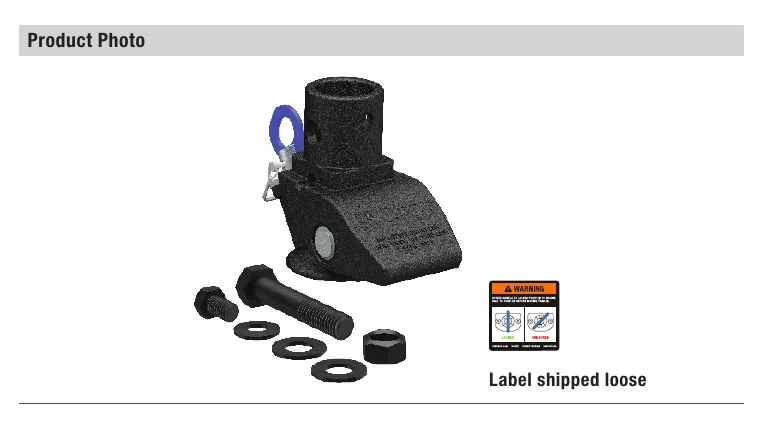
For CURT model 25050, the mounting arrangement uses a 1-inch bolt with flat washers and a top lock nut, plus a front 3/4-inch bolt with a concave washer. Specified torques are 400 ft-lb for the 1-inch hardware and 300 ft-lb for the 3/4-inch hardware. These dimensions and torques vary by maker and application. After coating, install the supplied labels; before moving the trailer, put the handle in the locked position and close the bale pin.
Keep the ball pocket and mechanism clean and inspect periodically for secure hardware and components. For CURT model 25050, maintenance at least annually includes checking hardware torque, greasing the ball pocket and pivot pin, and oiling pivot points with SAE 30 wt. motor oil. The listed capacities are 30,000 lb gross trailer weight and 7,500 lb tongue weight, without overriding the towing vehicle's capacity. Capacities, service intervals, and lubricant requirements vary by maker.
How It Works
Clearance and structural support
Check for interference with the towing vehicle, tongue, ground, and accessories in both extended and retracted positions before mounting and again after installation; CURT model 25050 requires at least 6 inches of clear area around the coupler during towing. A rigidly attached, fully supported outer tube with gussets as low as possible limits flexing and localized stress, while vertical alignment helps prevent binding. Keep the set bolts facing the towing vehicle, and have an AWS-certified welder perform the specified welding while protecting components from heat and avoiding welding over or near coupler holes or hardware.
Mounting integrity and positive locking
For CURT model 25050, install the 1-inch bolt with flat washers and a top lock nut, and the front 3/4-inch bolt with a concave washer; torque the respective hardware to 400 ft-lb and 300 ft-lb. Correct hardware and clamping force help resist movement that can loosen or damage the mounting joint, but these specifications must not be transferred to other applications without confirmation. After coating, install the supplied labels; do not use a coupler whose operation has been impaired, and do not move the trailer until the handle is locked and the bale pin is closed.
Maintenance and capacity limits
Keep the ball pocket and mechanism clean and periodically inspect hardware and components for security, because abrasive dirt and loose joints can accelerate wear. For CURT model 25050, maintenance at least annually includes checking hardware torque, greasing the ball pocket and pivot pin, and oiling pivot points with SAE 30 wt. motor oil; lubrication reduces friction and wear at moving surfaces. Its listed capacities are 30,000 lb gross trailer weight and 7,500 lb tongue weight, without overriding towing vehicle capacity; capacities, service intervals, and lubricants vary by maker.
Step-by-Step Procedure
0/8 doneCURT model 25050 only; values vary by maker and application
| Weight-carrying capacities | 30,000 lb gross trailer weight; 7,500 lb tongue weight. |
| Clear area during towing | At least 6 inches around the coupler. |
| Mounting hardware torque | 1-inch hardware: 400 ft-lb; 3/4-inch hardware: 300 ft-lb. |
| Maintenance interval and pivot-point oil | At least annually; SAE 30 wt. motor oil at pivot points. |
Figures
Diagnostic Chart
| Symptom | Check | Spec / Expected | Likely cause & fix |
|---|---|---|---|
| Coupler or nearby components contact the vehicle or accessories. | Check interference with the towing vehicle, tongue, ground, and accessories in extended and retracted positions, both before mounting and after installation. | CURT model 25050: at least 6 inches of clear area around the coupler during towing; confirm requirements for other models. | The installation location or surrounding equipment leaves insufficient clearance. Basis: Curt-Spec-Sheet |
| Mounting hardware is loose or the mounting joint shows movement. | Verify hardware size, washer type, lock nut, and torque. Inspect outer-tube attachment, full support, and gusset placement before returning the trailer to service. | CURT model 25050: 1-inch bolt with flat washers and a top lock nut at 400 ft-lb; front 3/4-inch bolt with a concave washer at 300 ft-lb. | Incorrect hardware, inadequate tightening, or insufficient mounting support may allow joint movement. Basis: Curt-Spec-Sheet |
| The handle binds or the locking arrangement cannot be secured. | Check vertical orientation and unimpaired operation. Inspect for installation interference, welding heat damage, and welding over or near holes or hardware. | Do not use the coupler if installation has impaired its operation. Before moving the trailer, put the handle in the locked position and close the bale pin. | Misalignment, interference, or welding damage may obstruct the mechanism. Basis: Curt-Spec-Sheet |
| The ball pocket or pivots are dirty, dry, or difficult to operate. | Clean the ball pocket and mechanism, inspect component security, and review whether torque checks and lubrication have been completed. | CURT model 25050: maintenance at least annually includes hardware torque checks, grease at the ball pocket and pivot pin, and SAE 30 wt. motor oil at pivot points. | Contamination and neglected lubrication can increase friction and accelerate wear. Basis: Curt-Spec-Sheet |
At the Bay: Diagnose the Case
CASE 1 / 4
Coupler or nearby components contact the vehicle or accessories.
- Test
- Compare
- Correct
Select the next check
Basis: Curt-Spec-Sheet. A likely cause is a hypothesis; confirm it with the applicable service procedure before repair.
Common Bay Mistakes
- ✕ Treating the CURT example's torque, clearance, capacity, or lubricant as universal.
- ✕ Checking clearance before mounting but not after installation.
- ✕ Accepting binding after welding or forcing the mechanism into position.
- ✕ Moving the trailer with the handle unlocked or the bale pin open.
Quick Check
Practice only — not scored.
Plan the Service Sequence
Planning practice only. Follow the applicable manufacturer's instructions, employer safety program and qualified supervision on real equipment.
Plan the first action. Compare the service steps with the bay mistakes.
Source: Curt-Spec-Sheet — 1-2